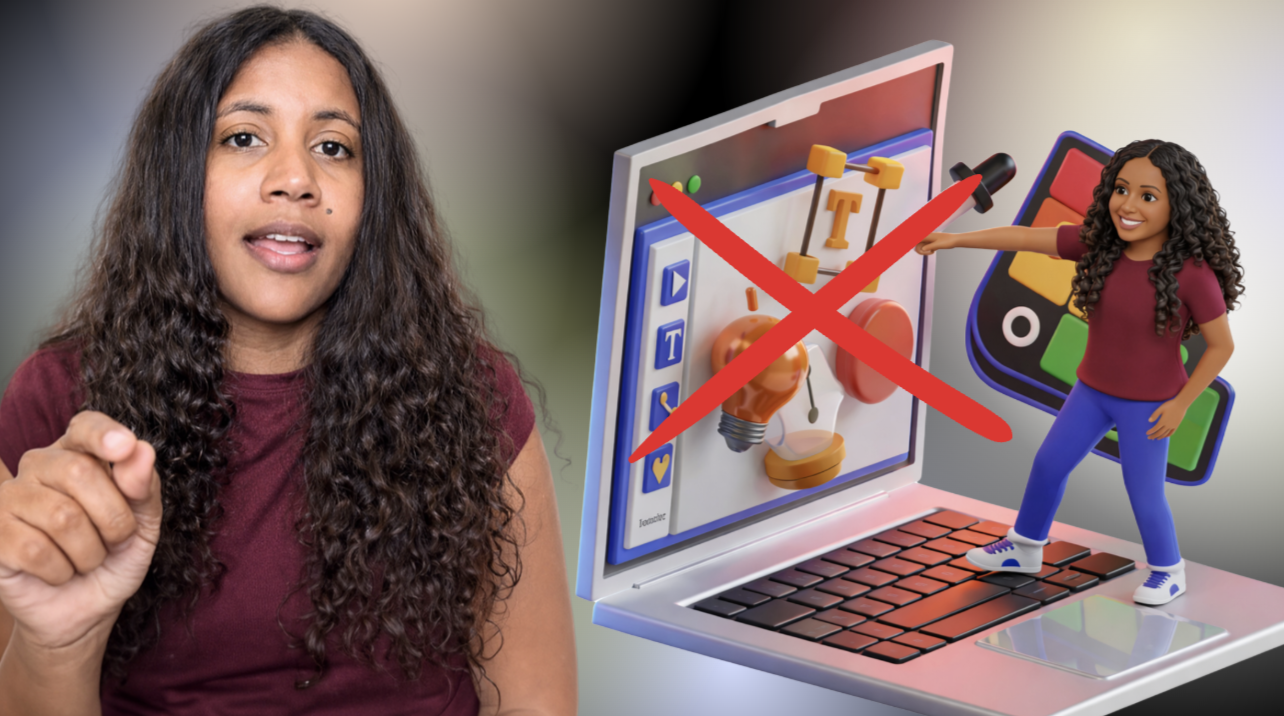
I didn’t wake up one day and decide to stop being a graphic designer.
But at some point… I realized I wasn’t only one anymore.
That might sound confusing—but it’s exactly what happened.
I didn’t stop designing visuals. I just started designing something bigger.
The questions changed
At some point, I stopped asking:
- “How should this look?”
…and started asking:
- “Is this actually working?”
- “Does this really need to exist?”
- “Am I solving a real problem?”
- “Did I just spend time on something that doesn’t matter?”
Those questions changed everything.
A real example: when “better design” didn’t work
At work, we send email campaigns to thousands of customers every month.
My role was simple: design emails to promote sales and new arrivals.
At one point, I looked at our emails and thought:
This feels outdated.
Too much information. Too many fonts. Too many competing elements.
From a design perspective—it had problems.
So after discussions with the team, I redesigned everything.
Something modern. Clean. Balanced. Visually appealing.
And honestly—I loved it.
It felt like me. Something I’d proudly put in my portfolio.
But from a business perspective?
Nothing changed.
- No increase in clicks
- No improvement in conversions
- No drop in unsubscribes
That’s when it hit me:
Did I invest time in something that actually needed to exist?
I stopped redesigning—and started understanding
Instead of jumping into another redesign, I paused.
I realized I didn’t need more creativity. I needed more understanding.
So I did something simple:
I subscribed to about 10 successful brands with similar products, audience, and pricing.
And I started observing—intentionally:
- How they structured their emails
- Where they placed buttons
- How they guided attention
- What they repeated consistently
- What felt natural—and what didn’t
At the same time, I analyzed our own emails the same way.
This time, I approached the work differently.
I started testing
Instead of making big changes, I focused on small ones:
- Adjusting button placement
- Simplifying layouts
- Cleaning sections without breaking structure
No dramatic redesigns. No “creative overhauls.”
Just intentional decisions.
And slowly—things started improving.
Not because the design looked better…
…but because it worked better.
That’s when I realized:
Design isn’t just about making things beautiful. It’s about making things effective.
I stopped designing screens
…and started designing decisions.
Instead of only thinking:
- “Where should this button go?”
- “What color should it be?”
I started asking:
- “Will the user understand this?”
- “What happens if they click here?”
- “What happens if they get confused?”
I wasn’t just arranging elements anymore.
I was shaping behavior.
How someone moves. How they think. How they decide.
It changed how I work—not just what I design
This shift didn’t stay limited to my own work.
It changed how I collaborate.
I started helping my team move beyond “making things look good” and toward designing with intention.
Because once you see friction—you can’t unsee it.
So I started looking beyond screens:
- Into workflows
- Into processes
- Into how things move from idea to execution
From the moment a product arrives… to the moment it goes live on the website and in campaigns.
I stopped thinking in isolated tasks.
And started thinking in systems.
Design is more than visuals
I began to see that good design isn’t just about how something looks.
It’s also about:
- Time
- Process
- Delivery
- Results
It’s about how everything connects.
How teams work. How decisions are made. How friction is reduced.
It wasn’t a moment—it was a process
There wasn’t a single turning point.
No switch that flipped from:
“I’m a graphic designer” → “Now I’m not.”
It happened gradually.
Where I landed
I didn’t stop being a graphic designer.
I just stopped being only that.
I became someone who designs how things work—not just how they look.
And somewhere along the way, I realized:
I had already crossed that line.
Final thought
If you’re a designer reading this, maybe you’ve felt something similar.
That moment where visuals stop being enough.
Where you start questioning impact, not just aesthetics.
That’s not you “leaving” design.
That’s you expanding it.
Comments
Be the first to leave a comment.